

4 Steps To Finding Your Sell-By Date

Republished with permission from Built to Sell Inc.

Most business owners think selling their business is a sprint, but the reality is it takes a long time to sell a company.

The sound of the gun sends blood flowing as you leap forward out of the blocks. Within five seconds you’re at top speed and within a dozen your eye is searching for the next hand. Then you feel the baton become weightless in your grasp and your brain tells you the pain is over. You start an easy jog and you smile, knowing that you did your best and that now the heavy lifting is on someone else’s shoulders.

That’s probably how most people think of starting and selling a business: as something akin to a 4 × 100-metre relay race. You start from scratch, build something valuable, measuring time in months instead of years, and sprint into the waiting arms of Google (or Apple or Facebook) as they obligingly acquire your business for millions. They hand over the cheque and you ride off into the sunset. After all, that’s how it worked for the guys who started Nest and WhatsApp – right?

But unfortunately, the process of selling your business looks more like an exhausting 100-mile ultra-marathon than a 100-metre sprint. It takes years and a lot of planning to make a clean break from your company – which means it pays to start planning sooner rather than later.

Here’s how to backdate your exit:

Step 1: Pick your eject date

The first step is to figure out when you want to be completely out of your business. This is the day you walk out of the building and never come back. Maybe you have a dream to sail around the world with your kids while they’re young. Perhaps you want to start an orphanage in Bolivia or a vineyard in Tuscany.

Whatever your goal, the first step is writing down when you want out and jotting some notes as to why that date is important to you, what you will do after you sell, with whom, and why.

Step 2: Estimate the length of your earn out

When you sell your business, chances are good that you will get paid in two or more stages. You’ll get the first cheque when the deal closes and the second at some point in the future – if you hit certain goals set by the buyer. The length of your so-called earnout will depend on the kind of business you’re in.

The average earnout these days is three years. If you’re in a professional services business, your earnout could be as long as five years. If you’re in a manufacturing or technology business, you might get away with a one-year transition period.

Estimate: + 1-5 years

Step 3: Calculate the length of the sale process

The next step is to figure out how long it will take you to negotiate the sale of your company. This process involves hiring an intermediary (a mergers and acquisitions professional, investment banker or business broker), putting together a marketing package for your business, shopping it to potential acquirers, hosting management meetings, negotiating letters of intent, and then going through a 60 to 90 day due diligence period. From the day you hire an intermediary to the day the wire transfer hits your account, the entire process usually takes 6 to 12 months. To be safe, budget one year.

Estimate: + 1 year

Step 4: Create your strategy-stable operating window

Next you need to budget some time to operate your business without making any major strategic changes. An acquirer is going to want to see how your business has been performing under its current strategy so they can accurately predict how it will perform under their ownership. Ideally, you can give them three years of operating results during which you didn’t make any major changes to your business model.

If you have been running your business over the last three years without making any strategic shifts, you won’t need to budget any time here. On the other hand, if you plan on making some major strategic changes to prepare your business for sale, add three years from the time you make the changes.

Estimate: + 3 years

Figuring out when to sell

The final step is to figure out when you need to start the process. Let’s say you want to be in Tuscany by age 50. You budget for a three-year earn out, which means you need to close the deal by age 47. Subtract one year from that date to account for the length of time it takes to negotiate a deal, so now you need to hire your intermediary by age 46. Then let’s say you’re still tweaking your business model – experimenting with different target markets, channels and models. In this case, you need to lock in on one strategy by age 43 so that an acquirer can look at three years of operating results.

It certainly would be nice to make a clean, crisp break from your business after an all-out sprint, but for the vast majority of businesses, the process of selling a company is a squishy, multi-year slog. So the sooner you start, the better.

This Sellability Score you instantly receive is a critical component to any business owner’s complete financial plan and is something that, until now, we have made available only to existing clients.

However, we recognized that there is value in knowing in advance of working with a financial planner whether or not your largest asset is ready to be exchanged for your retirement nest egg. Our view is that it’s better to learn more about your businesses sellability today, and find out how your business scores on the eight key attributes, so that you can ensure you obtain full value.

If your business part of your retirement plan, finding out your sellability score will be the best 10 minutes you could ever spend working “on” your business.

For more free information on Creating A Business Owner’s Dream Financial Plan, you can listen to a free, eight part series we did exclusively for business owners. The show is also available to subscribe to for free via iTunes.

Canada Reduces Tax Rates for Small Businesses

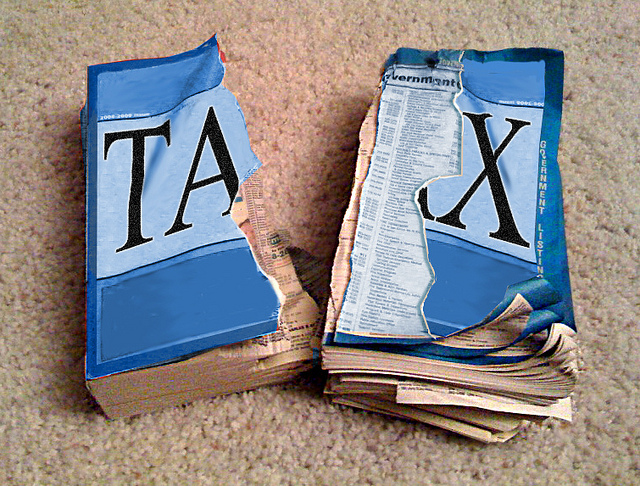
The Canadian government has continually shown support for small businesses in several different aspects. The federal budget revealed earlier this year in April confirms that the government is always striving to help its entrepreneurs. Along with a new TFSA contribution limit and lower RRIF withdrawal minimums, the budget also announced that the Conservative government has cut tax rates for small businesses from 11% to 9% over the next four years.

Effective January 1, 2016, the small business tax rate will decrease to 10.5% and continue to drop 0.5% per year until 2019. This change is applicable to businesses with an eligible taxable income limit of $500,000 annually, an amount that has gradually increased since the Harper government came into power in 2006. As the largest tax rate cut in more than 25 years, this adjustment will guarantee an average reduction of $1.2 billion a year in taxes. In addition, the Dividend Tax Credit (DTC) rate will also change accordingly at the same pace to simultaneously “maintain appropriate tax treatment of dividend income.”

Canada’s Views on Small Business Taxes

Canada’s philosophy on taxes is based on the principle that small businesses are an integral part of our economy. Measures approved by the Parliament are always taken with the intention of helping smaller companies. For example, the government is strongly committed to keeping taxes low for businesses with under $15 million in taxable capital. By keeping taxes down, this ensures that small businesses can retain more earnings. Furthermore, these numbers have already been reduced significantly from 13.12% in 2006 to 11% in 2008, when the annual eligible income for this rate was also raised from $300,000 to $500,000. As a result of the most recent tax rate cut, almost 700,000 businesses across the country will benefit from the lower rates. This, in turn, will generate additional resources for job creation and sustained growth in the Canadian economy.

How the Government Helps Small Businesses

The federal government frequently recognizes that small businesses are “engines for job creation” and understands the importance of encouraging entrepreneurship in Canada. It has been especially keen on helping these enterprises by offering ongoing support with substantial tax assistance and improved access to financing. With the proposed tax rate cut, the federal corporate income tax in 2015 will be 34% lower than in 2006. By the time the small business tax rate is dropped down to 9% in four years, the amount of federal corporate income tax paid will be 46% lower than in 2006. This will reflect an overall reduction of $38,600 a year to fuel business growth.

Other projects that the Canadian government have participated in include:

  • The Venture Capital Plan to improve access to venture capital funding needed to create jobs
  • The Business Innovation Access Program in 2013 to access business services and technical assistance at Canada’s learning institutions
  • The Lifetime Capital Gains Exemption, which has been steadily increasing since 2007 to bring tax relief to small business owners
  • Futurpreneur Canada, by providing $14 million to support young entrepreneurs
  • Action Plan for Women Entrepreneurs, as a channel to encourage women business leaders

Related Links
Canada’s Economic Action Plan
http://actionplan.gc.ca/en

New TFSA Limit 2015
https://www.ironshield.ca/articles/new-tfsa-limit-reaches-close-but-not-quite-to-proposed-11000/

Lower RRIF Withdrawal Minimums Benefit Seniors
https://www.ironshield.ca/articles/lower-rrif-withdrawal-minimums-more-flexibility-for-seniors/

How To Scale Up Your Service Business

Republished with permission from Built to Sell Inc.

Increase the value of your company by training others in your area of expertise.

It can be tough to grow a service business. Clients are typically buying your expertise, and if all you have to sell is time, the size of your business will always be limited by the number of hours in your day.

One way to scale up your service business is to launch a training division to teach others what you know. That’s what Nancy Duarte did when she found herself run ragged trying to grow Duarte, a Mountain View, California-based design studio.

Duarte’s specialty was creating high-impact presentations (her firm created the slides Al Gore used in the movie The Inconvenient Truth), but the work was tough to scale. She found herself spinning various plates and hoping none of them would fall to the ground. Finally she realized she was exhausted and no longer enjoying her job. She still loved the business but hated the constant demands on her time and energy.

In an effort to pull herself out of individual projects, she sat down and documented her methodology and from there created an internal training course so her employees could learn the Duarte way of creating presentations.

Once she had taught her own staff to handle the development of the presentations, she turned her philosophy and her approach into a book that was published in 2008 under the title Slide:ology – The art and science of creating great presentations. Her most recent book, Resonate: Present visual stories that transform audiences, was published in 2010). Having created a platform with the books, Nancy launched her training division, which offers corporate on-site workshops—her facilitators go to large companies to teach the employees how to make better presentations.

Due in large part to the training division, Duarte has scaled up her service business to the point where she now employs 82 people.

As business owners, we all know we should be documenting our systems for others to follow, but somehow writing our owner’s manual always takes a backseat to serving the next customer or fighting the next fire. Maybe what we need to do is stop thinking of writing down our process as an internal chore and instead focus on launching a training division. That way, the job of documenting our system goes from a textbook-boring task to the raw material needed to launch a revenue-generating business division.

For more free information on Creating A Business Owner’s Dream Financial Plan, you can listen to a free, eight part series we did exclusively for business owners. The show is also available to subscribe to for free via iTunes.

4 Traps To Avoid When Selling Your Company

Republished with permission from Built to Sell Inc.

Business owners have been known to refer to due diligence as “the entrepreneur’s proctology exam.” It’s a crude analogy but a good representation of what it feels like when a stranger pokes, prods, and looks inside every inch of your business.

Most professional acquirers will have a checklist of questions they need answered if they’re considering buying your company. They’ll want answers to questions like:

  • When does your lease expire and what are the terms?
  • Do you have consistent, signed, up-to-date contracts with your customers and employees?
  • Are your ideas, products and processes protected by patent or trademark?
  • What kind of technology do you use, and are your software licenses up to date?
  • What are the loan covenants on your credit agreements?
  • How are your receivables? Do you have any late payers or deadbeat customers?
  • Does your business require a license to operate, and if so, is your paperwork in order?
  • Do you have any litigation pending?

In addition to these objective questions, they’ll also try to get a subjective sense of your business. In particular, they will try to determine just how integral you are personally to the success of your business.

Subjectively assessing how dependent the business is on you requires the buyer to do some investigative work. It’s more art than science and often requires a potential buyer to use a number of tricks of the trade, such as:

Trick #1: Juggling calendars

By asking to make a last-minute change to your meeting time, an acquirer gets clues as to how involved you are personally in serving customers.

If you can’t accommodate the change request, the acquirer may probe to find out why and try to determine what part of the business is so dependent on you that you have to be there.

Trick #2: Checking to see if your business is vision impaired

An acquirer may ask you to explain your vision for the business, which is a question you should be well prepared to answer. However, he or she may ask the same question of your employees and key managers. If your staff members offer inconsistent answers, the acquirer may take it as a sign that the future of the business is in your head.

Trick #3: Asking your customers why they do business with you

A potential acquirer may ask to talk to some of your customers. He or she will expect you to select your most passionate and loyal customers and, therefore, will expect to hear good things. However, the customers may be asked a question like ‘Why do you do business with these guys?’ The acquirer is trying to figure out where your customers’ loyalties lie. If your customers answer by describing the benefits of your product, service or company in general, that’s good. If they respond by explaining how much they like you personally, that’s bad.

Trick #4: Mystery shopping

Acquirers often conduct their first bit of research behind your back before you even know they are interested in buying your business. They may pose as a customer, visit your website, or come into your company to understand what it feels like to be one of your customers.

Make sure the experience your company offers a stranger is tight and consistent, and try to avoid personally being involved in finding or serving brand-new customers. If any potential acquirers see you personally as the key to wooing new customers, they’ll be concerned business will dry up when you leave.

For more free information on Creating A Business Owner’s Dream Financial Plan, you can listen to a free, eight part series we did exclusively for business owners. The show is also available to subscribe to for free via iTunes.

Subscribers Make Your Company More Valuable

Republished with permission from Built to Sell Inc.

subscribe button

Why are Amazon, Apple and many of the most promising Silicon Valley start-ups leveraging a subscription business model?

Subscribers not only provide steady revenue; they make your company more valuable in the eyes of an acquirer. In a traditional business, customers buy your product or service once and may or may not choose to buy again; but in a subscription business, you have “automatic” customers who have agreed to purchase from you on an ongoing basis.

There are at least nine subscription models that can be leveraged by businesses ranging from service companies to market research firms to manufacturing concerns.

Recurring Revenue

Recurring revenue—the hallmark of a subscription business—is attractive to acquirers and makes your business more valuable when it’s time to sell. How much more valuable? To answer that, one has to first look at how your business will be valued without a subscription offering.

The most common methodology used to value a small to midsize business is discounted cash flow. This methodology forecasts your future stream of profits and then discounts it back to what your future profit is worth to an investor in today’s dollars, given the time value of money. This investment theory may sound like MBA talk, but discounted cash flow valuation is something you have likely applied in your personal life without knowing it. For example, what would you pay today for an investment that you hope will be worth $100 one year from now? You would likely “discount” the $100 by your expectation for a return on investment. If you expect to earn a 7 percent return on your money each year, you’d pay $93.46 ($100 divided by 1.07) today for an investment you expect to be worth $100 in 12 months.

Using the discounted cash flow valuation methodology, the more profit the acquirer expects your company to make in the future—and the more reliable your estimates—the more your company is worth. Therefore, to improve the value of a traditional business, the two most important levers you have are: 1) how much profit you expect to make in the future; and 2) the reliability of those estimates.

At SellabilityScore.com, one can see the effect of this valuation methodology. Since 2012, this methodology has been used to track the offers received by business owners who have completed the Sellability questionnaire. During that time, the average business with at least $3 million in revenue has been offered 4.6 times its pretax profit. Therefore, a traditional business churning out 10 percent of pretax profit on $5 million in revenue can reasonably expect to be worth around $2,300,000 ($5,000,000 x 10 percent x 4.6).

Then compare the value of a traditional company with the value of a subscription business. When an acquirer looks at a healthy subscription company, she sees an annuity stream of revenue throwing off years of profit into the future. This predictable stream of future profit means she is willing to pay a significant premium over what she would pay for a traditional company. How much of a premium depends on the industry, and some of the biggest premiums today go to companies in the software industry.

Subscription-based Software Companies

To understand what is going on in the valuation of subscription-based software companies, look at Dmitry Buterin. Buterin runs a subscription software company called Wild Apricot. He has also formed one of the world’s first mastermind groups of small and midsize subscription company founders, and each month the group meets to discuss strategies for running a subscription business.

Members of the group were constantly raising money or being courted by investors, so the topic of valuation came up a lot in their conversations. Buterin found that the consensus valuation range being offered to member companies was between 24 and 60 times monthly recurring revenue (MRR), which is equivalent to two to five times annual recurring revenue (ARR).

One way to validate Buterin’s numbers is to check with another guru from the world of subscription-based software companies. Zane Tarence is a partner with Birmingham, Alabama-based Founders Investment Banking, a company that specializes in selling software companies that use the subscription business model. Tarence estimates the valuation ranges he sees as belonging in one of three buckets:

24-48 x MRR (2-4 x ARR)
These are typically very small software companies with less than $5 million in recurring annual revenue. Companies in this first bucket are usually growing modestly, with subscription cancellation rates (i.e., “churn”) in the area of 2-4 percent per month.

48-72 x MRR (4-6 x ARR)
These are larger software companies with recurring revenue of at least $5 million annually, which they are growing at the rate of 25-50 percent per year. Their net churn is typically below 1.5 percent per month.

72-96 x MRR (6-8 x ARR)
These are the rare, fast-growth software companies that are growing more than 50 percent per year, with at least $5 million in annual revenue and net churn below 1 percent per month. These companies usually offer a solution (typically an industry-specific one) that their customers need to use to get their jobs done.

The software business is an extreme example of the benefits of subscription revenue, but no matter what industry you’re in, your company will likely command a premium if it enjoys recurring revenue.

From Alarm Systems to Prescriptions to Mosquitoes

For example, security businesses that monitor alarm systems and charge a recurring monthly monitoring fee to do so are worth about twice as much as security businesses that just do system installations. Retail pharmacies with a large pool of prescriptions for drugs that people take every day, like Lipitor and Lozol, command a premium over a traditional retailer because customers re-up their pills on a regular basis, creating a recurring revenue stream for the pharmacist.

Even tiny companies are worth more if they have subscription revenue. When my colleagues over at the Sellability Score analyzed very small businesses with less than $500,000 in sales, they found that the average offer these small businesses attract is 2.6 times pretax profit.

Compare that to the average Mosquito Squad franchise. Mosquito Squad is a Richmond, Virginia-based company that offers to keep bugs off your patio by spraying your backyard regularly with a proprietary chemical recipe approved by the Environmental Protection Agency. Mosquito Squad franchisees target affluent home owners with an average home value north of $500,000 who entertain in their backyard and don’t want to be bothered by mosquitoes. Mosquito Squad operates on a subscription basis. You subscribe to a season of spraying, which includes 8 to 12 sprays, depending on how buggy it is where you live.

Mosquito Squad is a franchise business, and the impact of its recurring revenue model on its valuation is remarkable. According to Scott Zide, the president of Mosquito Squad’s parent company, Outdoor Living Brands, Mosquito Squad franchises that changed hands over the most recent five-year period had revenue of $463,223 and sold for 3.7 times their pretax profit. That’s a 42 percent premium over the traditional value of a company with less than $500,000 in sales, and it’s because Mosquito Squad operates on a recurring subscription model and 73 percent of its annual spraying contracts renew each year.

Whether you plan to build a subscription-based software application or the simplest personal services business, having recurring revenue will boost the value of your most important asset.

Sellability Score

For more free information on Creating A Business Owner’s Dream Financial Plan, you can listen to a free, eight part series we did exclusively for business owners. The show is also available to subscribe to for free via iTunes.

Business Valuation

Republished with permission from Built to Sell Inc.

Deck: Business valuation goes beyond simple mathematics, but to get some idea of what your business might be worth, consider the three methods below.

Your business is likely your largest asset so it’s normal to want to know what it is worth. The problem is: business valuation is what one might call a “subjective science.”

The science part is what people go to school to learn: you can get an MBA or a degree in finance, or you can learn the theory behind business valuation and earn professional credentials as a business valuation professional.

The subjective part is that every buyer’s circumstances are different, and therefore two buyers could see the same set of company financials and offer vastly different amounts to buy the business.

This article provides the basic science and math behind the most common business valuation techniques, but keep in mind that there will always be outliers that fall well outside of these frameworks. These are strategic sales, where a business is valued based on what it is worth in the acquirer’s hands. Strategic acquisitions, however, represent the minority of acquisitions, so use the three methods below to triangulate around a realistic value for your company:

Assets-based

The most basic way to value a business is to consider the value of its hard assets minus its debts. Imagine a landscaping company with trucks and gardening equipment. These hard assets have value, which can be calculated by estimating the resale value of your equipment.

This valuation method often renders the lowest value for your company because it assumes your company does not have any “Good Will.” In accountant speak, “Good Will” has nothing to do with how much people like your company; Good Will is defined as the difference between your company’s market value (what someone is willing to pay for it) and the value of your net assets (assets minus liabilities).

Typically, companies have at least some Good Will, so in most cases you get a higher valuation by using one of the other two methods described below.

Discounted Cash Flow

In this method, the acquirer is estimating what your future stream of cash flow is worth to them today. They start by trying to figure out how much profit you expect to make in the next few years. The more stable and predictable your cash flows, the more years of future cash they will consider.

Once the buyer has an estimate of how much profit you’re likely to make in the foreseeable future, and what your business will be worth when they want to sell it in the future, the buyer will apply a “discount rate” that takes into consideration the time value of money. The discount rate is determined by the acquirer’s cost of capital and how risky they perceive your business to be.

Rather than getting hung up on the math behind the discounted cash flow valuation technique, it’s better to understand the drivers of your value when you use this method. They are: 1) how much profit your business is expected to make in the future; and 2) how reliable those estimates are.

Note that business valuation techniques are either/or and not a combination. For example, if you are using Discounted Cash Flow, the hard assets of the company are assumed to be integral to the generation of the profit the acquirer is buying and therefore not included in the calculation of your company’s value.

A money-losing bed and breakfast sitting on a $2 million piece of land is going to be better off using the Asset-based valuation method; whereas a professional services firm that expects to earn $500,000 in profit next year, but has little in the way of hard assets, will garner a higher valuation using the Discounted Cash Flow method or the Comparables technique described below.

Comparables

Another common valuation technique is to look at the value of comparable companies that have sold recently or for whom their value is public. For example, accounting firms typically trade at one times gross recurring fees. Home and office security companies trade at about two times monitoring revenue, and most security company owners know the Comparables technique because they are often getting approached to sell by private equity firms rolling up small security firms. Typically you can find out what companies in your industry are selling for by asking around at your annual industry conference.

The problem with using the Comparables methodology is that it often leads owners to make an apples-to-bananas comparison. For example, a small medical device manufacturer might think that, because GE is trading for 20 times last year’s earnings on the New York Stock Exchange, they too are worth 20 times last year’s profit. However, if one looks at the more than 13,000 businesses analyzed through the The Value Builder System, it’s clear that a small medical device manufacturer is likely to trade closer to five times pre-tax profit.

Small companies are deeply discounted when compared to their Fortune 500 counterparts, so comparing your company with a Fortune 500 giant will typically lead to disappointment.

Finally, the worst part about selling your business is that you don’t get to decide which methodology the acquirer chooses. An acquirer will do the math on what your business is worth to them behind closed doors. They may decide your business is strategic, in which case back up the Brinks truck because you’re about to get handsomely rewarded for your company. But in most cases, an acquirer will use one of the three techniques described here to come up with an offer to buy your business.

Sellability Score

For more free information on Creating A Business Owner’s Dream Financial Plan, you can listen to a free, eight part series we did exclusively for business owners. The show is also available to subscribe to for free via iTunes.

What a Study of 14,000 Businesses Reveals About How You Should Not Be Spending Your Time

Republished with permission from Built to Sell Inc.

In an analysis of more than 14,000 businesses, a new study finds the most valuable companies take a contrarian approach to the boss doing the selling.

Who does the selling in your business? My guess is that when you’re personally involved in doing the selling, your business is a whole lot more profitable than the months when you leave the selling to others.

That makes sense because you’re likely the most passionate advocate for your business. You have the most industry knowledge and the widest network of industry connections.

If your goal is to maximize your company’s profit at all costs, you may have come to the conclusion that you should spend most of your time out of the office selling, and leave the dirty work of operating your businesses to your underlings.

However, if your goal is to build a valuable company—one you can sell down the road—you can’t be your company’s number one salesperson. In fact, the less you know your customers personally, the more valuable your business.

The Proof: A Study of 14,000 Businesses

We’ve just finished analyzed our pool of Sellability Score users for the quarter ending December 31. We offer The Sellability Score questionnaire as the first of twelve steps in The Value Builder System, a statistically proven methodology for increasing the value of a business.

We asked 14,000 business owners if they had received an offer to buy their business in the last 12 months, and if so, what multiple of their pre-tax profit the offer represented. We then compared the offer made to the following question:

Which of the following best describes your personal relationship with your company’s customers?

  • I know each of my customers by first name and they expect that I personally get involved when they buy from my company.
  • I know most of my customers by first name and they usually want to deal with me rather than one of my employees.
  • I know some of my customers by first name and a few of them prefer to deal with me rather than one of my employees.
  • I don’t know my customers personally and rarely get involved in serving an individual customer.

2.93 vs. 4.49 Times

The average offer received among all of the businesses we analyzed was 3.7 times pre-tax profit. However, when we isolated just those businesses where the owner does not know his/her customers personally and rarely gets involved in serving an individual customer, the offer multiple went up to 4.49.

Companies where the founder knows each of his/her customers by first name get discounted, earning offers of just 2.93 times pre-tax profit.

When Value Is the Enemy of Profit

Who you get to do the selling in your company is just one of many examples where the actions you take to build a valuable company are different than what you do to maximize your profit. If all you wanted was a fat bottom line, you likely wouldn’t invest in upgrading your website or spend much time thinking about the squishy business of company culture.

How much money you make each year is important, but how you earn that profit will have a greater impact on the value of your company in the long run.

Sellability Score

For more free information on Creating A Business Owner’s Dream Financial Plan, you can listen to a free, eight part series we did exclusively for business owners. The show is also available to subscribe to for free via iTunes.

The Secrets of Benefits Planning

Photo by: Michelangelo Carrieri licensed under Creative Commons Attribution 2.0 Generic

Photo by: Michelangelo Carrieri licensed under

In small and mid-sized businesses, there are many common issues that may arise and a number of these problems are related to employee benefits. Recently, I spoke with Roger Thorpe, President of Thorpe Benefits and a specialist in benefits and wellness planning, to discuss his line of work. In today’s blog post, I will highlight some of the problems and share with you some simple solutions and tips that you could try to better manage your benefit plans.

Make no mistake about it: small businesses inevitably struggle with the cost of employee benefits. When a company grows to a certain size, they realize that they must offer a benefit plan in order to attract new employees, who are likely to have had benefits at their old employer. So, the company puts a plan in place for competitive purposes. The cost of benefits varies annually depending on the market, and companies, on average, see a five to ten percent increase in benefit costs per year.

Companies rely on their broker or agent to inform them whether or not a benefit plan is suitable. Nowadays, there are professionals who work in all the different areas of specialty and it is more important than ever to work with a specialist because if you are not, then you are merely getting the generic idea of a service. Having a generic, standard plan could be most frustrating for the business owner because they are not really given a rationale for what the rates cover. Here, I encourage you to work with a benefits specialist and go through a six-step process to discover some of the most common problems and solutions of benefits planning.

1. There is a disconnect between why a benefit plan was introduced in the first place and the role it now plays with employees.

Sometimes, you will find that employee benefits are no longer fulfilling their purpose. With a real mix of Boomers, Gen X-ers and Y-ers in today’s workforce, employee benefits may be way down the list in terms of what they want.

Solution: You want to re-evaluate and ask yourselves: how do I want to treat my employees? This is called the employee benefit philosophy. You want to go back to the basics and set up some parameters and rules around your design. This way, you can really create a benefit plan that would fit the needs of your employees.

2. There is an anxiety when it comes to the cost of benefit plans.

This is one of the most frustrating points for business owners: not knowing what goes into the price of a health or dental rate.

Solution: Learn everything you can about how rates are calculated: the claims, target ratios, loss ratios, inflation, reserves, pooling, commissions, and credibility. Understanding these terms will give you greater confidence when you know what you are paying for. In addition, calculating your own rates will help eliminate that anxiety.

3. The plan is being managed by an inexperienced employee.

In small businesses, this task is often delegated to a junior employee. But with very little training provided, mistakes can go undiscovered, salaries may not be up-to-date, etc.

Solution: Make sure you take the time to provide real training for the administrator in charge of managing the plan. This way, there will be no errors when the company data gets audited. You can even do group training with other companies or schedule one-on-one sessions.

4. There is a lack of employee appreciation and cost accountability.

Employees often don’t seem to appreciate the benefits that they are given by the company. As a result, they start to take them for granted and forget that the employer is the one who is paying for them, not the insurance company.

Solution: Build appropriate employee communication tools. There are a number of ways to do this. First, you could meet with them in person to reconfirm the value that is in the benefit plan and who pays for it. The second thing you could do is to use written statements or memos. An example would be total reward statements, which are summaries of all the salary, bonus, vacation, and benefit costs of an employee, and who pays for them. It is, in essence, an employer- vs. employee-paid comparison, and can be a very powerful tool.

Other methods that allow you to acquire feedback include surveys and focus groups. These are opportunities for employees to discuss what they are looking for from the company.

5. There is no schedule and no tracking mechanism for the plan.

Without a concrete plan, it is difficult to keep track of claims and all the options and alternatives that are available.

Solution: Set up a schedule for the year. Arrange a meeting every 90 days so that you can stay on track with the budget. Plan at least two additional meetings to review all your choices and plan all the alternatives. Allot a time for a face-to-face presentation with your employees for feedback. At this point, you are looking at about seven scheduled meetings throughout the year, but you will find that having these meetings makes managing benefit plans much easier.

6. Incorporating a level of wellness or health promotion into the business is still a fairly new idea.

Solution: Have a discussion on the concept of wellness in your organization and understand how a prevention program could help you in reducing the costs of benefits. In Canada and the U.S., wellness promotion is a huge and important advantage for a company because it educates employees on how to eat well, exercise, manage stress, etc., which shows their competitors in the industry that they can take good care of their employees.

Following these six steps will give you a different way of looking at benefit plan management. This program will allow you to take a more effective and more proactive approach to benefit plans as a business owner. Check out http://thorpebenefits.com/ for tools and resources that can help you create the right plan for your employees or speak to a specialist on this topic.

Related Links
Thorpe Benefits
http://thorpebenefits.com/

How to Choose a Financial Planner
https://www.ironshield.ca/landing/how-to-choose-and-work-with-a-financial-planner-you-can-trust/